Best Tool Belts for Woodworkers by Pocket Count
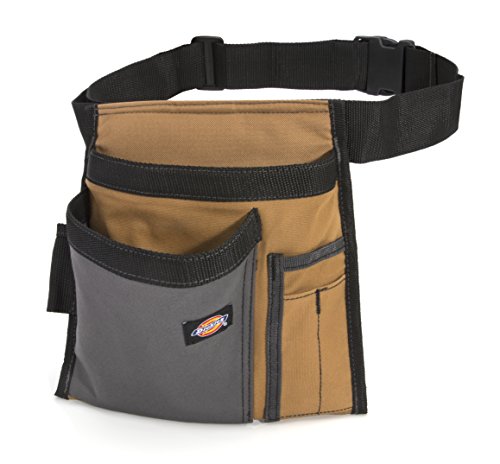
Six tool belts sorted by pocket layout, weight and waist range. The winner carries five pockets on 5.92 oz of canvas and fits 32 to 52 inch waists.

By Cody HartUpdated 16 min read
On this page
- Best professional tool belt for woodworkers at a glance
- How I screened these six down from the category
- What actually decides a woodworking tool belt
- 1. Dickies 5-Pocket Single Side Tool Belt Pouch — Best overall
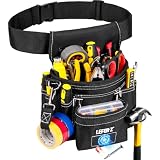
- 2. LEFOR·Z 14-Pockets Tool Belt with Magnetic Pouch — Best for heavy use
- 3. AP LEATHER PRO-19 Full Grain Leather Tool Belt — Best premium
- 4. Glorisunity 2-Pocket Canvas Work Waist Apron — Best for families
- 5. MELOTOUGH 2-Inch Web Work Belt — Best for beginners
- 6. Allinside Magnetic Wristband — Best budget pick
- Pocket count is the wrong first question
- What the listings do not tell you
- Leather, canvas or webbing: what changes?
- Who should skip a full tool belt?
- The verdict
- FAQ
The best professional tool belt for woodworkers is the Dickies 5-Pocket Single Side Tool Belt Pouch, a 5.92 oz canvas rig on a webbed belt that adjusts from 32 to 52 in. The LEFOR·Z 14-Pocket Tool Belt is the better buy if you also frame, hang cabinets or carry a hammer all day. Price-band map: entry buys a strap or a wristband, mid buys canvas with pockets included, and premium buys leather with suspenders or a heavy magnetic-pouch system.
Best professional tool belt for woodworkers at a glance
| Pick | Pockets | Waist range | Price |
|---|---|---|---|
Best overall Dickies 5-Pocket Tool Belt Pouch |
5 | 32-52 in | Check Price |
Best for heavy use LEFOR·Z 14-Pocket Tool Belt |
14 | 31-48 in | Check Price |
Best premium AP LEATHER PRO-19 Leather Belt |
19 claim | 30-56 in | Check Price |
Best for families Glorisunity Canvas Waist Apron (2-pack) |
2 | one size, adjustable | Check Price |
Best for beginners MELOTOUGH 2-inch Web Work Belt |
0 (belt only) | 28-53 in | Check Price |
Best budget pick Allinside Magnetic Wristband |
15 magnets | 17.32 in wrist strap | Check Price |


How I screened these six down from the category
The listings in this category run from a single strap of webbing to a full leather rig with suspenders, and the word "woodworker" gets tagged onto most of them. That is the honest position: Amazon's search returns a mix, and no product here is engineered specifically for cabinetmakers versus framers.
Here is how I cut the field:
- Every pick names woodworkers, carpenters or a general trade in its listing or specifications.
- Every pick publishes at least a waist range or a wrist size, so you can tell whether it fits before you buy.
- I kept one representative from each price position: entry belt-only, entry wearable, two mid canvas options, and two premium loaded rigs.
I dropped anything without a stated size, anything sold as a pure fashion belt, and anything that was a pouch listed without either a belt or a compatible loop system. That last cut matters. A pouch alone is not a tool belt, and half the search results in this category conflate the two.
What survived is a set that maps cleanly onto four buyer profiles: bench woodworker, mobile woodworker, hobbyist or family shop, and a shopper starting a modular kit.
What actually decides a woodworking tool belt
Most guides in this category compare pocket counts. That is not what decides it. Weight-on-your-hips-when-empty is. A woodworker who spends the day at a bench, moving between a table saw, an assembly table and a chop station, will hate a 7.21 lb rig that carries nothing until you fill it. A woodworker who also frames, hangs cabinets and moves between vehicle and site will curse a 5.92 oz canvas pouch the first time they try to hang a claw hammer off it.
So the real question is a shape question. There are three shapes here:
- Apron shape. Cloth waist covering with two big pockets. Loose, light, forgiving. Dickies and Glorisunity.
- Loaded rig. Multiple pouches on a wide belt, with hammer loop and tape clip. LEFOR·Z and AP LEATHER.
- Wear-only pieces. A belt with no pockets, or a wristband. MELOTOUGH and Allinside.
Match the shape to your day first, then compare pockets inside that shape. A 19-pocket claim beats a 5-pocket count in the abstract, but not for a woodworker who only ever carries a tape, a pencil, a marking knife and a chisel.
1. Dickies 5-Pocket Single Side Tool Belt Pouch — Best overall
A canvas pouch on a 32-52 in webbed belt that weighs 5.92 oz empty, which is the right combination for shop woodworking.
Best for: a bench woodworker who wants a light canvas rig with room for chisels and a tape Skip it if: you carry a framing hammer and pouches of nails all day
The Dickies wins on the number that matters, which is empty weight. 5.92 oz is barely there, and the 2 x 10.3 x 10.3 in footprint keeps the pouch flat against your thigh rather than sticking out like a hip holster. Five pockets is the right count for a woodworker's short list: two large mains for offcuts and hardware, one screwdriver-sized loop, one plier pocket, two slip pockets for a pencil and a marking knife. The webbed belt with a plastic buckle covers waists from 32 to 52 in, so it fits over a t-shirt in summer and a hoodie in winter. Dickies lists a 1-year limited warranty, which is the longest published in this set aside from the wristband. The trade-off is real: this is a single-side pouch, so no hammer loop and no dedicated tape clip. If your day includes swinging a hammer, this is the wrong pick.
Pros:
- Lightest wearable rig here at 5.92 oz
- Adjustable belt covers 32 to 52 in
- Five purpose-shaped pockets, not generic slots
- Reinforced webbing on the pocket mouths
- 1-year limited warranty published
Cons:
- No hammer loop, no tape clip
- Single-side only, no right-and-left balance
- Canvas will show sawdust and glue faster than leather
2. LEFOR·Z 14-Pockets Tool Belt with Magnetic Pouch — Best for heavy use
A 1.1 lb loaded rig on a wide belt with detachable pouches, a hammer loop and a magnet zone.
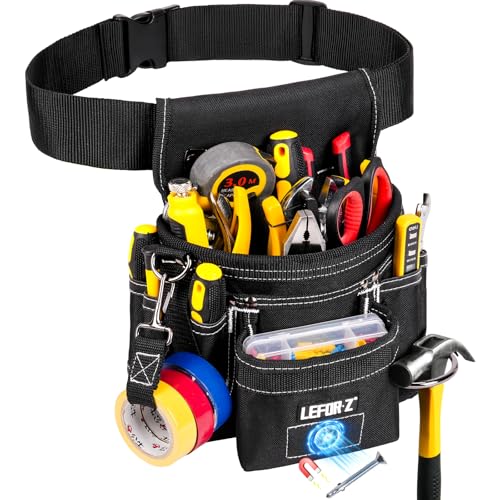
Best for: a woodworker who also frames, hangs cabinets or moves between shop and site Skip it if: you spend the day at a bench and hate a loaded waist
If your day includes a claw hammer, a cordless driver and a run of screws in your pocket, this is the pick. LEFOR·Z packs 14 pockets, a steel hammer hole, a tape measure clip, an electrical tape tether and a magnetic panel onto a 31-48 in wide belt. The listing calls the magnet strong enough to hold screws while you climb a ladder; treat that as LEFOR·Z's claim, not a measured figure. Empty weight is 1.1 lb, which is heavy enough that you feel it before you put a hammer in it, and the wider belt is designed to spread that load. The pouches detach, which is the feature that makes this a real system rather than a fixed layout: you can pull the driver pouch off at the bench and clip it back on when you leave. LEFOR·Z publishes a 6-month warranty, the shortest here. In this set, it is the only pick that carries hammer, tape and driver at the same time without you rigging it yourself.
Pros:
- 14 pockets plus hammer hole and tape clip
- Detachable pouches move to the hip you prefer
- Wide belt to spread the load
- Magnetic panel on the pouch face
- Fits 31 to 48 in waists
Cons:
- 1.1 lb empty is heavy for bench-only work
- 6-month warranty is the shortest in this set
- Nylon fabric, not leather, at a premium price position
3. AP LEATHER PRO-19 Full Grain Leather Tool Belt — Best premium
Full-grain leather with suspenders and a 19-pocket layout on a 30-56 in belt.

Best for: a finish carpenter who wants leather, suspenders and a fixed layout Skip it if: 7.21 lb of empty belt is more than you want to wear
This is the most expensive pick here, and it is the only leather rig in the set. AP Leather says the PRO-19 is built from full-grain leather with riveted reinforcements and a stainless-steel hammer hook, and the pouch system carries 19 pockets across a double-pouch layout. Suspenders come with it, which is the point of a leather belt this heavy: 7.21 lb empty is a lot to hang off your hips, and the suspenders shift some of that to your shoulders. The 30-56 in size range is the widest here, which is what leather with punched holes tends to allow. Where this pick earns its position is durability across seasons of shop work, since leather softens and moulds to your body in a way nylon does not. Where it loses is the empty weight and the fixed layout: you cannot detach a pouch and clip it to the other hip, and you cannot lighten it by removing something you do not use. Compare it to the LEFOR·Z: same profile of loaded rig, six times the empty weight, leather instead of nylon.
Pros:
- Full-grain leather across the pouches and belt
- Suspenders included to spread the load
- Widest waist range here, 30 to 56 in
- 19 pockets across a double-pouch layout, per the listing
- Riveted reinforcements at stress points
Cons:
- 7.21 lb empty is the heaviest in this set
- Fixed layout, pouches do not detach
- No published warranty
- Highest price position of the six
4. Glorisunity 2-Pocket Canvas Work Waist Apron — Best for families
A machine-washable two-pocket canvas apron sold as a two-pack, 23.6 x 11 in per apron.

Best for: a hobby woodworker or a shared shop where anyone can grab an apron Skip it if: you need loops for chisels or a hammer
The Glorisunity is the only pick here sold as a two-pack, and it is the only one Glorisunity lists as machine washable. That combination is what earns it a place in a family shop: two aprons on a peg, one for you and one for whoever else is helping today, and both go in the wash when the glue dries and the finish spatters set in. At 23.6 x 11 in, this is a half-apron rather than a bib, and it carries two large pockets and a long waist strap that Glorisunity says fits people with different waistlines. There are no loops, no hammer hole, no tape clip. That is the trade-off: this is storage for a phone, a pencil, a folding rule and a small handful of screws, not for a full kit. Set the expectation right and this is the friendliest pick in the set for a beginner, a partner joining you in the shop, or a class of students. Set the expectation wrong and you will be looking for somewhere to put your speed square inside a week.
Pros:
- Sold as a pack of 2
- Machine washable
- One-size adjustable waist ties
- Light and low profile at the bench
- Canvas construction
Cons:
- Only two pockets, and both are open slip pockets
- No hammer loop, no tape clip
- No published weight or warranty
5. MELOTOUGH 2-Inch Web Work Belt — Best for beginners
A 2-inch webbed belt with loop liner and a plastic quick-release buckle, fits waists 28-53 in.

Best for: someone building a modular rig from scratch and buying pouches later Skip it if: you want pockets included in the box
The MELOTOUGH is the entry point for a modular kit. It is a 2-inch wide webbed belt with a loop liner on the inside face, a plastic quick-release buckle, and a 28-53 in waist range, which is the widest low end here. Weight is 3.84 oz. There are no pockets in the box: this belt is the platform, and you clip pouches to it as you decide what you actually need. That is a real strategy for a woodworker who is not yet sure whether their day looks more like bench work or more like install work, because you can start with one pouch and add another when the first one is full. The obvious catch is that this pick is only cheap in isolation. Load it up with three quality pouches and it becomes the most expensive rig here. Compare it to the Dickies at the same price position: the Dickies gives you a belt and five pockets in one purchase, and the MELOTOUGH gives you a belt and a plan.
Pros:
- Widest low-end waist range, from 28 in
- 2-inch webbing with a loop liner for pouches
- Light at 3.84 oz
- Quick-release plastic buckle
- Second-cheapest pick here
Cons:
- No pockets in the box
- Total cost climbs once you add pouches
- No published warranty
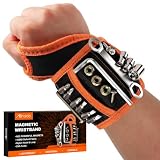
6. Allinside Magnetic Wristband — Best budget pick
A 17.32 in wrist strap with 15 embedded magnets and a 2-year warranty, the cheapest pick here.

Best for: a woodworker who only needs to hold screws and bits near the work Skip it if: you also need a tape, a chisel and a pencil on you
The Allinside is not a belt at all, and I have included it because it solves the one problem woodworkers describe more often than any other: reaching for a screw and finding it in the sawdust. It is a 17.32 in wrist strap with 15 magnets under a 1680D Oxford face, an EVA-padded backing and a hook-and-loop closure. Allinside lists a 2-year warranty, which is the longest in this set. What earns it the budget slot is that it does one job at a fraction of the cost of a loaded rig, and it does that job on your wrist rather than at your hip, which is where the fasteners actually need to be when you are driving them. The trade-off is the obvious one: it carries steel only, and it carries nothing that a magnet does not hold. For hanging a cabinet door with a handful of screws, it is a real tool. For a day of general shop work, it is a supplement to a belt, not a replacement.
Pros:
- Cheapest pick in this set
- 15 magnets, per Allinside
- 2-year warranty published
- Adjustable to most wrists
- EVA-padded backing for all-day wear
Cons:
- Not a belt, so no tape, hammer or pencil storage
- Holds only ferrous fasteners
- Small capacity, one handful of screws at a time
Pocket count is the wrong first question
Nineteen pockets sounds better than five. It is not, for most woodworkers. Here is the real hierarchy of questions, in order:
- Shape. Apron, loaded rig, or wear-only? Pick this from your day, not from the product photos.
- Empty weight. How much are you willing to wear before you put a single tool in it?
- Waist range. Does it fit over your winter layer as well as your summer t-shirt?
- Hammer loop and tape clip. Yes or no, and on which side?
- Pocket count and layout. Only now.
Run the Dickies through this test: apron shape, 5.92 oz empty, 32-52 in, no hammer loop, five pockets. Run the AP Leather through it: loaded rig, 7.21 lb empty, 30-56 in, hammer hook, 19 pockets per the listing. Both are legitimate, and they suit opposite woodworkers. The pocket count is what you get after the first four answers, not before.
What the listings do not tell you
Three things every product page in this category leaves out, that you should ask before you buy:
- Which side the pouch sits on. The Dickies is a single-side pouch. If you are left-handed, this matters, and the listing does not specify a preferred orientation. Check the photos on the product page.
- How the buckle holds under load. Every pick here except the AP Leather uses a plastic quick-release buckle. Plastic is fine for a canvas rig, and it is a fair question mark on a 1.1 lb loaded belt. The AP Leather's leather-and-metal closure is one of the reasons it is priced where it is.
- Whether the pouches are stiffened. A soft canvas pocket sags when you drop a chisel in it, and a chisel with an unsheathed edge in a sagging pocket is a hazard. Dickies calls the pockets webbing-reinforced. LEFOR·Z and AP Leather describe theirs as reinforced or riveted. Glorisunity does not describe the pockets as stiffened, and I would not trust an edged tool in one.
None of that is in the specifications table. All of it decides how the belt behaves after a month.
Leather, canvas or webbing: what changes?
Three materials show up in this set, and each behaves differently under woodworking use.
- Canvas (Dickies, Glorisunity) is light, forgiving and cheap to replace. It absorbs finish, glue and stain, and it will look used within a season. That is fine. Canvas machine-washes on the Glorisunity; the Dickies listing does not confirm washability.
- Nylon (LEFOR·Z, MELOTOUGH, and the face of the Allinside) is tear-resistant, holds shape when loaded, and shrugs off water. It does not soften over time the way leather does, and heat from a driver bit will mark it.
- Leather (AP Leather) is the heaviest, the most expensive and the longest-lived. Full-grain leather softens and moulds to your body, and riveted stress points last for years. The trade is 7.21 lb of empty belt.
For a shop woodworker, canvas is usually enough. For a woodworker who works away from the bench, nylon is the right compromise. Leather is a preference and an investment, not a requirement.
Who should skip a full tool belt?
Not every woodworker needs one. If any of the following describes your day, skip the belt and pick a different solution:
- You work entirely at a fixed bench. A wall-mounted rack or a bench-top tray puts your tools in reach without adding weight to your hips. The Allinside wristband handles the fasteners.
- You do fine finish work or turning. A loaded belt catches on the lathe, on clamps and on trim. A two-pocket apron like the Glorisunity is the right shape.
- You already own a bag you like. A tote or a rolling bag stays with the job. You do not need to also wear the tools.
- You are teaching kids or newcomers. Two canvas aprons and a magnetic wristband cost less than one loaded rig and are safer around new users.
A belt earns its place when you move between stations, when you carry a hammer, or when reaching for a tool costs you a step. Otherwise the belt is the problem it claims to solve.
The verdict
Two-track: If you are a bench woodworker or you work primarily in a shop, the Dickies 5-Pocket Single Side Tool Belt Pouch is the right professional tool belt for woodworkers. It weighs 5.92 oz empty, fits 32-52 in waists, carries the short list of tools a shop day actually needs, and Dickies backs it with a 1-year limited warranty. If you are a mobile woodworker who also frames, hangs cabinets or moves between vehicle and site, the LEFOR·Z 14-Pocket Tool Belt is the better buy: it carries a hammer, a tape and a driver at the same time on detachable pouches, and its 31-48 in wide belt is built for the load.
The cutoff between them is a hammer. If you swing one every day, buy the LEFOR·Z. If you do not, the Dickies is lighter, cheaper and more comfortable at the bench. The AP LEATHER PRO-19 is the pick if you want leather and are willing to wear 7.21 lb of empty belt. The Allinside wristband earns its place as a supplement to any of them, not a replacement.
FAQ
Is a tool belt worth it for a shop woodworker?
Whether a tool belt is worth it for a shop woodworker depends on how much you move. If you cross between a table saw, an assembly table and a chop station, a light canvas rig like the Dickies at 5.92 oz saves steps and holds a tape, a pencil and a marking knife. If you work at one fixed bench with a wall rack in reach, a belt adds weight without saving time.
What is the best professional tool belt for woodworkers who also frame?
The best professional tool belt for woodworkers who also frame is the LEFOR·Z 14-Pocket Tool Belt. It carries a hammer on a steel hammer hole, a tape on a dedicated clip, and a driver in a detachable magnetic pouch, all on a wide 31-48 in belt. Empty weight is 1.1 lb, which is heavy for bench-only work but right for a day of framing and install.
How does the Dickies compare to the LEFOR·Z?
The Dickies compares to the LEFOR·Z on two axes: weight and load-out. The Dickies is 5.92 oz empty with five pockets and no hammer loop, built for bench-focused shop days. The LEFOR·Z is 1.1 lb empty with 14 pockets, a hammer hole and a tape clip, built for mobile work. If you swing a hammer daily, buy the LEFOR·Z; if you do not, the Dickies is lighter and cheaper.
Is full-grain leather worth the extra cost?
Full-grain leather is worth the extra cost if you plan to keep the belt for years and you value how leather softens to your body. The AP LEATHER PRO-19 uses full-grain leather with riveted reinforcements and a stainless-steel hammer hook. The trade-off is 7.21 lb of empty weight and a fixed pouch layout. For a shop woodworker who wants light and forgiving, canvas is enough.
Do I need a magnetic wristband if I already own a tool belt?
You need a magnetic wristband alongside a tool belt only if you drive fasteners often and lose them in sawdust. The Allinside has 15 magnets, a 17.32 in strap and a 2-year warranty, which is the longest in this set. It holds a handful of screws or bits at the wrist, where the driver is working. As a supplement to the Dickies or the LEFOR·Z, it saves reach time.
Start with the shape that fits your day, then narrow on weight and waist range, and only then count pockets. For most woodworkers, that math ends at the Dickies: five pockets, a 32-52 in webbed belt, 5.92 oz on your hip, and a 1-year limited warranty from a brand that has sold work gear for a long time. The picks around it exist for real reasons, and the LEFOR·Z in particular is the honest answer for framing and install work. But the Dickies is the default because it disappears while you work, and that is the highest compliment you can pay a belt. Pick your shape, buy once, and get back to the wood.