Best Ergonomic Desk for Programmers: ProtoArc Leads

Amazon's search for this phrase returns mostly seating, not desktops. Here's what that means for your setup, which pick wins for long coding sessions, and where the one true standing desk in the group fits.

By Cody HartUpdated 17 min read
On this page
- Best ergonomic desk for programmers at a glance
- Why this search returns chairs, not desktops
- How I screened this group down to six
- What actually decides a long coding setup?
- 1. ProtoArc EC200 Ergonomic Office Chair with Adjustable Seat — Best overall
- 2. ErGear 48 X 24 Inch Height Adjustable Electric Standing Desk — Best budget pick
- 3. ProtoArc EC200 Pro Ergonomic Mesh Office Chair for Remote — Most versatile
- 4. Hbada E3 Air 2026 Ergonomic Office Chair — Best upgrade
- 5. HON Ignition 2.0 Ergonomic Office Chair — Best warranty
- 6. Hbada X7 Smart Ergonomic Chair — Best premium
- Seat depth, lumbar travel and the numbers that matter
- Does the standing desk change the answer?
- What owning one of these actually involves
- The verdict
- FAQ
The best ergonomic desk for programmers, judged across this group, is the ProtoArc EC200: it moves the seat pan 1.97 in across 5 lock positions and adds 2.36 in of lumbar height travel, which is the pairing that fixes long-session posture. If your problem is the surface rather than the seat, the ErGear 48 x 24 in electric standing desk is the pick that raises your keyboard instead.
Here is the honest framing first. Search this phrase on Amazon and you mostly get seating, not desktops, so if you came looking for a butcher-block work surface with cable channels, this is not your group and a dedicated desk category is. Everyone else, stay: one adjustable surface and five chairs is actually the correct shopping list for a coding setup, because the chair is the part you fail at first.
Best ergonomic desk for programmers at a glance
| Pick | Key adjustment | Published warranty | Price |
|---|---|---|---|
Best overall ProtoArc EC200 Ergonomic Office Chair |
Seat depth 1.97 in, 5 positions Lumbar 2.36 in |
3 years | Check Price |
Best budget pick ErGear 48 X 24 Inch Electric Standing Desk |
Motorised height, memory presets claim | Not listed | Check Price |
Most versatile ProtoArc EC200 Pro Mesh Office Chair |
4D armrests, 30° rotation Recline 90°–130° |
5 years | Check Price |
Best upgrade Hbada E3 Air 2026 Ergonomic Chair |
3-zone lumbar claim, 140° tilt | Not listed | Check Price |
Best warranty HON Ignition 2.0 Ergonomic Office Chair |
Height and width adjustable arms | Full lifetime | Check Price |
Best premium Hbada X7 Smart Ergonomic Chair |
Automated lumbar tracking claim 3-level ventilated seat |
Not listed | Check Price |


Why this search returns chairs, not desktops
Amazon read "ergonomic desk" loosely. Five of the six results here sit in Home Office Desk Chairs, and only the ErGear sits in Home Office Desks. That mismatch matters, so I am not going to pretend a chair is a desktop.
What I will argue is that the shopping list is still right. A programmer's ergonomic problem is rarely the tabletop. It is ten hours of static hip flexion, a keyboard tray two inches too high, and a lumbar curve unsupported from 2pm onward.
So read this as a setup guide rather than a tabletop guide. If you specifically need a work surface, one pick here delivers that, and the rest of the group is where your money should go afterwards. The best ergonomic desk for programmers is genuinely a two-part purchase in most homes:
- The surface, which sets keyboard and monitor height
- The seat, which sets hip angle, lumbar contact and shoulder position
Get the second one wrong and no tabletop rescues you.
How I screened this group down to six
I started from what the listings publish, not from what the marketing says. Three screens ran in order.
- Does it publish adjustment figures? A chair that says "ergonomic" without a travel range in inches tells you nothing. The ProtoArc pair publish 1.97 in of seat depth travel and 2.36 in of lumbar height, and that specificity is why the EC200 leads.
- Is there a stated warranty? Three of six publish one: 3 years, 5 years, and a full lifetime. Two publish nothing. One publishes nothing and is the most expensive pick here, which is a real mark against it.
- Does anything cover the work surface itself? Exactly one does, at 48 x 24 in.
What got cut in my thinking, rather than in the data: anything where the only evidence was an adjective. "Comfy", "premium mesh" and "built to last" are the manufacturer's words, and I have treated them as such throughout.
The result is a group with one movable surface, two chairs built around published measurements, one lifetime-warranty workhorse, and two chairs selling automation. Different problems, different picks.
What actually decides a long coding setup?
Most guides to the best ergonomic desk for programmers compare surface size and lumbar marketing language. Neither decides it. Seat depth does.
Here is the mechanism. If the seat pan runs too long for your femur, the front edge presses behind your knees and you slide forward to escape it, which pulls your lower back off the lumbar pad within an hour. If the pan runs too short, your thighs lose support and your weight lands on your sit bones. Depth adjustment is the setting that fixes both, and it is the one most chairs at this level do not offer.
Two picks publish a real figure: the EC200 and the EC200 Pro, both at 1.97 in across 5 lock positions, both stated for users 5'4"–6'0". The Hbada E3 Air lists seat depth among its adjustments without a travel figure. The HON and the X7 do not list seat depth at all.
The second criterion is lumbar depth, not just lumbar height. A pad that moves up and down but not in and out only fits one spine shape. Both ProtoArc listings claim 0.8 in of depth adjustment on top of the 2.36 in of height.
Third, and only third, comes airflow. It matters, and it is the tiebreaker rather than the decider.
1. ProtoArc EC200 Ergonomic Office Chair with Adjustable Seat — Best overall
The only pick that pairs a published seat depth range with a published lumbar depth range, at the second-cheapest position in this group.
Best for: someone 5'4"–6'0" under 220 lbs who codes 8+ hours a day Skip it if: you are taller than 6'0" or need a headrest
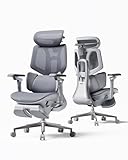
What separates the EC200 inside this group is measurement. ProtoArc publishes 5 seat depth positions across 1.97 in of travel, 2.36 in of lumbar height adjustment and 0.8 in of lumbar depth adjustment. Nothing else here gives you all four numbers. The listing also names its fit window openly: 5'4"–6'0" and under 220 lbs. That is unusually honest, and it is the reason to buy or to walk away.
The seat pan uses 55D high-density foam, which ProtoArc says resists collapse and references BS EN 1335 and BIFMA X5. Treat that as the manufacturer's claim, not a verified test. The published warranty runs 3 years.
Sizing is the part to get right before you order. The chair measures 44.5 x 20 x 21.3 in and weighs 45 lb, so it is a normal-footprint task chair rather than an executive slab. A 20 in width slides under most desks without fighting the armrests.
The trade-off against the rest of the group is straightforward. The EC200 Pro gives you five years of warranty, mesh and a headrest; this one gives you a foam pan and three years. And unlike the ErGear, it does nothing at all about your keyboard height.
Pros:
- Seat depth 1.97 in across 5 lock positions
- Lumbar adjusts 2.36 in vertically, 0.8 in in depth
- 3-year published warranty
- Second-cheapest pick in this group
- Fit window stated explicitly in the listing
Cons:
- Fit range caps at 6'0" and 220 lbs
- No headrest listed
- Shorter warranty than the EC200 Pro and the HON
- Foam seat retains more heat than the mesh picks
2. ErGear 48 X 24 Inch Height Adjustable Electric Standing Desk — Best budget pick
The only pick in this group that is an actual desk, and it is also the cheapest thing here.

Best for: anyone who needs the work surface itself to move Skip it if: you run three monitors and a laptop dock
If you searched for the best ergonomic desk for programmers and meant a desktop, this is your pick by default, because it is the only one. The surface measures 48 x 24 in, the frame ships at 43.8 lb, and the boxed dimensions run 24 x 24 x 47.6 in. ErGear describes an electric lift with memory presets, a quiet motor, an alloy steel frame with what it calls aerospace-grade lifting columns, and low-VOC materials. Those are the manufacturer's claims; the listing's height range is truncated, so I will not quote a number I cannot see in full.
A 24 in depth is the figure to think hardest about. That is enough for a single large monitor at arm's length, or two 24 in panels angled inward. Add a third display or a docked laptop riser and you will be working closer to the screen than you want, which is its own ergonomic problem.
It also sells faster than anything else in this group by a wide margin, which tells you the sit-stand surface is what most buyers in this space actually reach for.
The trade-off: no published warranty figure, unlike three of the chairs here. And a desk that moves does nothing for your lumbar curve while you sit at it.
Pros:
- Cheapest pick in this group
- Only pick that adjusts the work surface itself
- 48 x 24 in top with steel frame
- Memory presets claimed for sit-stand switching
- Sells faster than the rest of this group
Cons:
- No published warranty
- 24 in depth is tight for three-monitor setups
- Full height range not stated in the listing
- Requires assembly at 43.8 lb
3. ProtoArc EC200 Pro Ergonomic Mesh Office Chair for Remote — Most versatile
Same 1.97 in seat depth mechanism as the winner, plus mesh, a headrest and five years of warranty.

Best for: warm rooms and people who lean back on calls Skip it if: you want a solid foam seat pan
This is the EC200's adjustment package moved onto mesh. Seat depth still travels 1.97 in across 5 lock positions for users 5'4"–6'0", and lumbar still claims 2.36 in of height plus 0.8 in of depth. What you gain is a 100% high-elastic mesh seat that ProtoArc says keeps air circulating, a 12.8 x 7.87 in headrest with 3D adjustment, and 4D armrests with a 10 x 4 in PU surface and 30° rotation.
The recline is the sleeper feature for developers. Four lock positions at 90°, 105°, 120° and 130° with adjustable tilt tension mean you can set one angle for typing and one for reading a design doc, then flip between them. Backrest and seat move together, per the listing.
Warranty runs 5 years, which is two more than the standard EC200. Dimensions are 44.5 x 20 x 20 in at 45 lb, so it is marginally shallower than the winner and fits the same desk cutouts.
Why it is not first: it is the third-cheapest here rather than the second, and it is the slowest seller among the ProtoArc pair by a large gap. Mesh seat pans also feel firmer under the sit bones than 55D foam, and that preference is personal rather than technical.
Pros:
- 5-year warranty, longest here outside the HON
- Mesh seat and back for airflow
- 4D armrests with 30° rotation
- Recline locks at 90°, 105°, 120° and 130°
- 12.8 x 7.87 in headrest with 3D adjustment
Cons:
- Costs more than the standard EC200 for the same depth mechanism
- Same 5'4"–6'0" fit ceiling
- Mesh pan feels firmer than foam for some people
- Slowest-selling of the two ProtoArc chairs here
4. Hbada E3 Air 2026 Ergonomic Office Chair — Best upgrade
A gravity-sensing recline chassis and a 140° tilt range, aimed explicitly at people who write code for a living.

Best for: developers who dislike fiddling with tension knobs Skip it if: you need a published weight or warranty figure before buying
Hbada names programmers directly in this listing, which is rare, and the feature set backs the intent. The company describes a 3-zone elastic lumbar system that fills the lower back gap, CloudMesh construction for pressure distribution, and a gravity-sensing chassis that sets recline resistance from your body weight rather than a knob. Tilt reaches 140°. The headrest and armrests are described as 4D, and seat depth is listed as adjustable, though without a travel figure.
Auto-tension is a genuinely useful idea for the way developers sit. You lean back to think, come forward to type, and never once adjust the dial. A chassis that handles that for you removes a setting most people set once and set wrong.
Footprint is 40 x 27.5 x 27.5 in, notably wider than either ProtoArc, so measure your desk cutout. Hbada references BIFMA testing, an SGS Class 4 gas lift and a heavy-duty steel base, and calls the result 10-year-level durability. That phrase is a durability claim, not a warranty.
The gap against the ProtoArc chairs is documentation. No published weight, no published warranty, and no seat depth travel figure to compare. You are buying the description rather than the measurement.
Pros:
- Gravity-sensing recline sets tension automatically
- Tilt range to 140° for reading and breaks
- 3-zone lumbar system claimed
- 4D headrest and armrests
- Mid-range price position in this group
Cons:
- No published warranty
- No published weight
- Seat depth listed without a travel figure
- 27.5 in width needs a wider desk opening
5. HON Ignition 2.0 Ergonomic Office Chair — Best warranty
A full lifetime warranty, which is the longest coverage in this group by a distance.
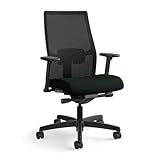
Best for: someone who wants one chair to outlast several jobs Skip it if: you want a headrest or adjustable lumbar depth
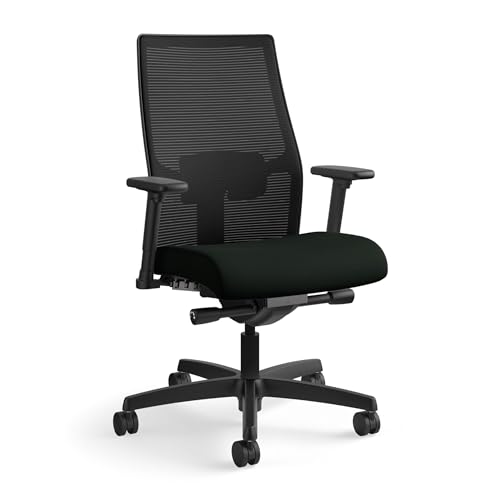
The case for the Ignition 2.0 is coverage. HON lists a full lifetime warranty, and no other pick here comes close. If you plan to sit in the same chair through three employers, that single line does more for your long-run cost than any feature bullet in this article.
The chair itself is a mid-back mesh design with lumbar support, height and width adjustable arms, advanced tilt and swivel mobility, per the listing. Dimensions run 44.5 x 28.5 x 27 in, and the published weight of 24 lb is the lightest here, which makes it the easiest to reposition on a hard floor. The size is listed as Oversized.
What HON does not publish is the adjustment detail the ProtoArc listings hand you. There is no seat depth travel figure, no lumbar height or depth range, and no headrest. Arms adjust for height and width but not, on this listing, forward and back.
It also holds the fifth price position here, so you are paying near the top of the group for a shorter feature list and buying the warranty instead. That is a defensible trade, just be clear it is the trade you are making. Only one seller lists it.
Pros:
- Full lifetime warranty, longest here
- Lightest chair in the group at 24 lb
- Mesh back for airflow
- Height and width adjustable arms
- Advanced tilt and swivel
Cons:
- No published seat depth or lumbar adjustment figures
- No headrest listed
- Second-most expensive pick with fewer published adjustments
- Only one seller stocks it
6. Hbada X7 Smart Ergonomic Chair — Best premium
Sensor-driven lumbar tracking, graphene heating and a 3-level ventilated seat, at the top price position here.

Best for: long sessions in a cold room, with recovery features built in Skip it if: you have a tight corner or move your setup often
The X7 is the most ambitious listing in this group. Hbada describes dual pressure sensors feeding a control system that adapts lumbar support to your posture continuously, rather than holding one fixed position. On top of that sits what the company calls a Work Recovery System: 8D biomimetic massage, graphene heating and red light comfort technology. Airflow runs three adjustable levels through the seat. Frame material is described as aerospace-grade aluminium with high-elastic breathable mesh. Armrests are listed at 720° of adjustment, and the headrest at 4D.
Heating is the feature I would actually value here. Anyone who codes in an unheated spare room in January knows what a cold seat does to concentration at 7am.
Now the reality check. It weighs 75 lb, the heaviest here by 30 lb, and it lists no warranty at all despite being the most expensive pick in the group. Dimensions are 19.1 x 32.1 x 27.4 in. No seat depth travel figure is published either, so the adjustment that decides this category is described only as 360° ergonomic adjustment.
Against the EC200, you are trading published measurements for automation and comfort tech. That is a real choice, not a bad one, but it is the more expensive side of it.
Pros:
- Automated lumbar tracking with dual pressure sensors
- 3-level ventilated seat cushion
- Graphene heating and massage functions claimed
- 720° adjustable armrests, 4D headrest
- Aluminium frame described
Cons:
- No published warranty, at the highest price position here
- Heaviest pick at 75 lb, awkward to move
- No published seat depth travel figure
- Slow seller compared with most of this group
Seat depth, lumbar travel and the numbers that matter
If you want to judge a chair I did not cover, these are the figures to hunt for on the listing. Anything vaguer is marketing.
- Seat depth travel in inches, plus the number of lock positions. Two picks here publish 1.97 in and 5 positions. Most listings publish nothing.
- Lumbar height range and lumbar depth range separately. Height alone fits one spine. The ProtoArc pair claim 2.36 in and 0.8 in.
- Stated user height and weight range. The EC200 names 5'4"–6'0" and under 220 lbs. That is a specification, not a limitation.
- Recline lock angles. 90°, 105°, 120° and 130° is a usable set. "Reclines" is not.
- Armrest axes. 4D means up/down, forward/back, left/right and rotation.
- Published warranty in years. Three of six here publish one. That is the pattern across the whole category.
- Overall width against your desk cutout. 20 in slides under most surfaces; 27.5 in does not always.
Two of these figures do most of the work: seat depth and lumbar depth. Chase those first.
Does the standing desk change the answer?
Yes, if your pain is in your neck and shoulders rather than your lower back. It doesn't, if your pain is lumbar.
The ErGear moves the surface, so it changes keyboard and monitor height. That fixes shoulder shrug from a too-high desk and forward head posture from a too-low monitor. It does nothing about hip angle or lumbar contact, because you are still sitting in whatever chair you already own for most of the day.
So the honest answer for the best ergonomic desk for programmers is sequencing:
- If your desk is the wrong height and you cannot change it, buy the ErGear first.
- If your desk height is workable, buy the EC200 first and fix the seat.
- If you have both problems and one budget, the ErGear is cheaper, so start there and add a chair later.
Watch the depth figure either way. At 48 x 24 in, the ErGear gives you 24 in front to back, which sets your maximum viewing distance. Deep desks let you push a large monitor back; this one does not, so a smaller panel or a monitor arm helps.
What owning one of these actually involves
Assembly comes first, and nobody enjoys it. The ErGear ships in a box measuring 24 x 24 x 47.6 in at 43.8 lb, so clear floor space and expect to attach a frame to a top. The chairs range from 24 lb to 75 lb; the HON at 24 lb is the one you can carry upstairs alone.
Then there is the setup nobody does. Buying a chair with 5 seat depth positions and leaving it in position 3 forever wastes the feature you paid for. Sit fully back, then adjust the pan until you can fit two or three fingers between the front edge and the back of your knee. Set the lumbar pad to the deepest point of your lower back curve, not the middle of the backrest.
Mesh needs less maintenance than foam, but shows dust faster on black frames. The 55D foam pan on the EC200 will compress somewhat over years regardless of what the listing claims, which is what a 3-year warranty is for.
One practical note on sellers: two picks here are stocked by a single seller, so your options if something arrives damaged are narrower.
The verdict
The ProtoArc EC200 wins because it publishes the two numbers that decide long-session comfort and charges near the bottom of this group to do it: 1.97 in of seat depth across 5 lock positions, and 2.36 in of lumbar height with 0.8 in of depth. Every other chair here either sells you a description in place of a measurement or asks materially more money for the same idea. Three years of warranty is fair for the price position.
Two conditions flip it. First, height and weight: the EC200 is calibrated for 5'4"–6'0" and under 220 lbs, and if you sit outside that window the HON Ignition 2.0 is the safer buy, with a full lifetime warranty and an oversized frame. Second, room temperature: if your workspace runs warm and you lean back through meetings, the EC200 Pro is the better chair, adding all-mesh construction, a 12.8 x 7.87 in headrest, 4D armrests and 5 years of coverage.
And if your real complaint is that your keyboard sits too high, none of the chairs help. The ErGear 48 x 24 in electric standing desk is the cheapest pick here and the only one that moves the surface, which makes it the first purchase for anyone stuck at a fixed-height table.
FAQ
Is a chair or a desk the better value for programmers?
A chair is the better value for most programmers, because the seat controls hip angle and lumbar contact, which is where all-day discomfort starts. The ProtoArc EC200 holds the second-cheapest position in this group while publishing 1.97 in of seat depth travel. Buy the surface first only if your current desk height forces your shoulders up.
Is an ergonomic office chair worth it for coding all day?
An ergonomic office chair is worth it if you use its adjustments. The value sits in seat depth, lumbar height and lumbar depth, not in the word ergonomic on the box. A chair with 5 depth positions and 2.36 in of lumbar travel earns its keep across 8-hour sessions. One left at factory settings does not.
What size desk do programmers need for multiple monitors?
Desk depth matters more than width for multiple monitors, because depth sets viewing distance. The ErGear measures 48 x 24 in, which comfortably handles one large panel or two 24 in displays angled inward. Three monitors plus a docked laptop will feel cramped at 24 in of depth unless you add a monitor arm to push screens back.
ProtoArc EC200 or EC200 Pro for the best ergonomic desk for programmers?
Choosing between the EC200 and EC200 Pro comes down to heat and warranty. Both share the same 1.97 in seat depth mechanism and 2.36 in lumbar height range. The Pro adds all-mesh construction, a 12.8 x 7.87 in headrest, 4D armrests and 5 years of coverage. The standard EC200 costs less with a foam pan and 3 years.
What mistake do most buyers make in this category?
Most buyers in this category shop by lumbar marketing language and ignore seat depth. If the pan is too long for your legs, you slide forward and lose lumbar contact within an hour, no matter how the pad is described. Check for a published depth travel figure in inches. Two picks here have one; three do not.
Start by measuring two things tonight: the height of your current desk surface from the floor, and the gap between the front edge of your seat and the back of your knee when you sit fully back. Those two numbers tell you whether you need the ErGear or the EC200 first. What makes the ProtoArc EC200 the right default is that it removes an excuse. When a chair publishes its fit window, its depth travel and its lumbar range, you can set it correctly on day one and know it is set correctly. Most chairs in this space leave you guessing.